Are you dreaming about more space, more privacy, and a mountain lifestyle in Evergreen? Buying acreage can absolutely deliver that, but in the foothills, land comes with a different set of questions than a typical in-town home purchase. If you are considering acreage property in Evergreen, you need to look beyond views and lot size to understand access, utilities, future building plans, and wildfire readiness. Let’s dive in.
Why acreage in Evergreen is different
Acreage property in Evergreen is often less about the number of acres and more about how the land functions day to day. A beautiful parcel may look ideal at first glance, but practical details can shape how easy it is to live there, improve it, and insure it.
Jefferson County guidance makes this especially important in Evergreen. The county says it has the second highest wildfire risk of any county in Colorado, with greater risk than 98% of U.S. counties. It also identifies Evergreen as one of the highest-risk areas in the county, which means buyers should treat wildfire planning and property access as core parts of due diligence.
Start with legal access
One of the first things to confirm is how you legally reach the property. Jefferson County says access can be by deeded right-of-way, a recorded ingress and egress easement, or a private road of record, and each must be at least 20 feet wide.
That may sound technical, but it matters in a very practical way. If access is unclear, too narrow, or dependent on an easement with limitations, it can affect your use of the property and future improvements.
Check the driveway length and layout
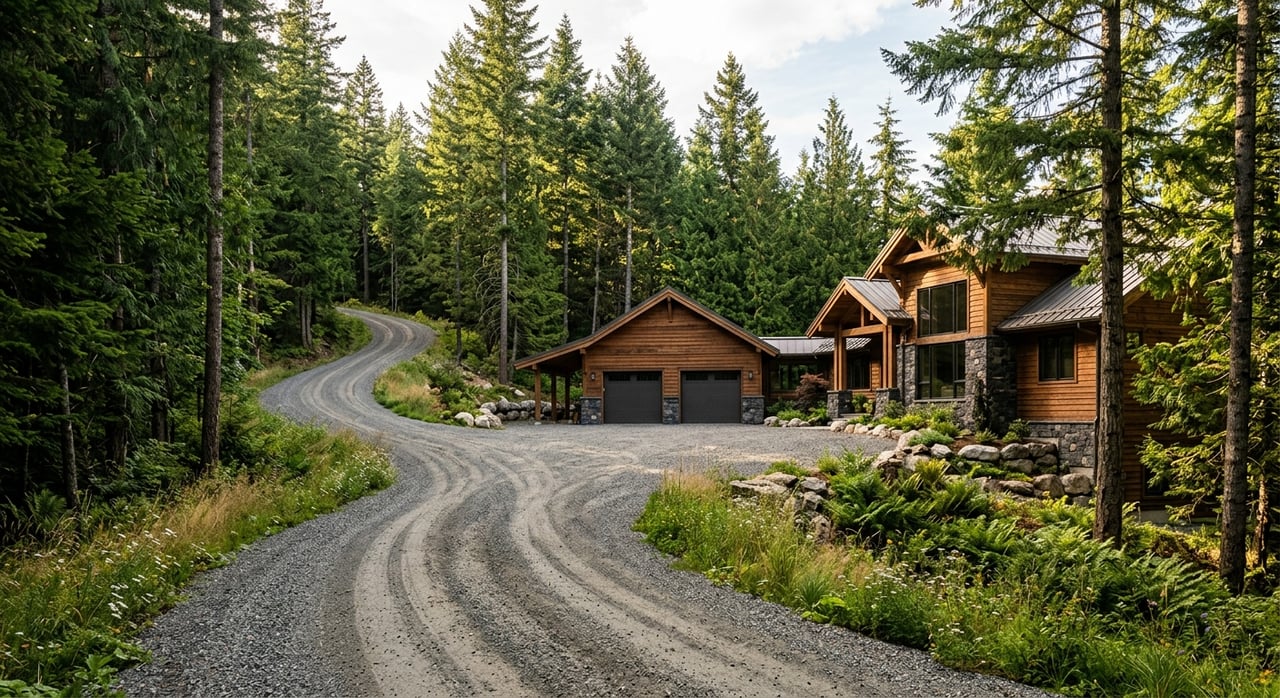
Driveways on acreage can be much longer than what you see in suburban neighborhoods. Jeffco says driveways longer than 50 feet, plus any road on the subject property, must meet the county roadway design and construction manual.
The county also says a turnaround is required when a driveway exceeds 150 feet. That is important for daily convenience, snow operations, and emergency access.
Know who controls the road connection
If the driveway connects directly to a county-maintained road, Jefferson County requires an access permit for new driveways or changes to existing ones. The county says this review applies to the access cut or the portion of the driveway in the county right-of-way.
If the parcel connects to a state highway instead, the access permit is handled by CDOT Region 1 for Jefferson County. Either way, it is smart to verify road jurisdiction early so you know which standards apply.
Think beyond the map
On acreage, access is not just about reaching the home in good weather. You should also consider whether the driveway has room for snow storage, whether the grade is manageable, and whether gates or easement terms could affect daily use.
These issues can become more important if you plan to add a detached garage, bring in contractors, or host regular visitors. A property that works well in summer should still work in winter and during emergency conditions.
Wildfire should shape your search
Wildfire is one of the biggest factors in Evergreen acreage ownership. Jefferson County says steep topography, dense fuels, and hot, dry, windy conditions all contribute to local risk, and more than 47,000 homes in the county are in the wildland-urban interface, or WUI.
For buyers, that means wildfire resilience is not an afterthought. It should be part of how you evaluate the property from the beginning.
Understand the updated resiliency code
Jefferson County approved updates to its Wildfire Resiliency Code on March 10, 2026, with an effective date of July 1, 2026. The county says the code applies to new buildings and many exterior alterations in the WUI, but not to interior-only work.
If you are buying acreage with plans to build, expand, or make major exterior upgrades, this matters. Future improvements may trigger county review for defensible space and structure hardening.
Ask about defensible space early
Jeffco says its defensible-space and structure-hardening rules apply to new buildings and many exterior alterations in the WUI. The county-approved defensible-space permit itself has no fee, and inspections must be performed by a county-approved mitigation specialist.
That makes defensible space more than a maintenance preference. It can be part of the approval path for future work, so it is wise to understand the existing conditions on the property before you buy.
Water and well details matter
Many acreage properties rely on private wells, and that changes the due diligence process. The Colorado Division of Water Resources issues well permits and keeps records that can show allowable uses, original applications, and construction and pump records.
Those records are useful because not every well is approved for the same uses. You want to confirm that the well type matches how the property is being used or how you hope to use it.
Review the well permit and test history
Jefferson County requires proof of water for new dwellings. If a property uses a well, the county checklist calls for a copy of the well permit and a four-hour well test completed within the last three years, and the well type must match the proposed use.
In the Mountain Ground Water Overlay District, Jeffco requires a valid well permit or decreed water right, a four-hour yield test, and at least 300 gallons of storage if the yield is below 1 gallon per minute. For a buyer, that means yield and storage are not minor details. They directly affect the property’s readiness for use.
Plan for water quality responsibility
CDPHE says private wells are not regulated under the Safe Drinking Water Act, which means the well user is responsible for testing and maintaining water quality. If you are buying acreage, that makes water testing an important part of your inspection planning.
Quantity and quality are both part of the picture. A property can have a valid permit and still require careful review of ongoing maintenance and testing needs.
Septic and wastewater need close review
Acreage living often means an on-site wastewater treatment system instead of a public sewer connection. That is common in mountain areas, but buyers should understand the condition, design, and permitting history of the system.
Jefferson County says new OWTS permits on vacant lots require a raw well-water sample analyzed for total coliform and nitrate before final approval. The county also notes that OWTS design standards must be met before it issues a permit.
Verify records and inspections
Jefferson County provides inspection requests and online records through its Citizen Portal. Reviewing available septic records can help you understand whether the system was permitted, whether repairs or updates have been noted, and whether the property has limitations that could affect future expansion.
If you are considering adding bedrooms, guest space, or an accessory dwelling in the future, septic capacity can become especially important. It is better to know that upfront than after closing.
Future projects can change the equation
A lot of buyers are drawn to acreage because they want flexibility. Maybe you want a barn, detached garage, workshop, greenhouse, shed, or ADU down the road. In Evergreen, those plans should be checked against zoning and permitting rules early.
Jefferson County says garages, sheds, ADUs, greenhouses, barns, and stables are generally accessory uses in residential zones. The county also says total accessory square footage cannot exceed the primary square footage, accessory footprint cannot exceed 75% of the house footprint, and accessory structures must meet current setbacks and height limits.
Sheds and small structures still count
Sheds under 200 square feet are treated as mini-structures, and in most residential districts Jeffco caps mini-structures at a cumulative 200 square feet. That can surprise buyers who assume small outbuildings are always simple add-ons.
The county also says sheds, garages, barns, and shipping containers may not be placed in easements or floodplains. Placement matters just as much as size.
ADUs require a deeper review
Jeffco says ADUs are reviewed like new homes. That means staff will look at access, water, wastewater, fire protection, and mitigation even when there is already an existing home on the lot.
If an ADU is part of your long-term vision, it is smart to treat that as a major feasibility question before you commit to a property. Not every lot that looks spacious will support every future idea.
Grading, trails, and site work may need permits
Acreage buyers often picture improving the land over time. You might want to grade a driveway, cut a trail, build a road, or prepare a building site. In Jefferson County, those plans can trigger engineering and permitting requirements.
Jeffco says grading, excavation, trail building, and road building may require a land-disturbance permit. Projects disturbing more than one acre also need a CDPHE construction stormwater permit.
Steep sites may need more study
Jefferson County says soils or geotechnical reports can be required for new dwellings or additions in geologic hazard areas or when a plat note requires them. On a steep or geologically sensitive site, this can affect both cost and timeline.
That does not mean a property is a bad fit. It just means your evaluation should include the land itself, not only the home sitting on it.
Build your acreage due diligence team
Buying acreage in Evergreen usually works best when you bring in the right experts early. Jeffco’s own guidance points buyers toward planning staff, Road & Bridge, the local fire protection district, a surveyor, a geotechnical engineer when needed, a well contractor or water-rights professional, a septic inspector, and a wildfire mitigation specialist.
You may not need every specialist for every property, but the right team can help you avoid surprises. On foothills acreage, the best purchase decisions are usually the ones made with clear information, not assumptions.
What to focus on before you buy
If you want a simple way to evaluate acreage property in Evergreen, start with these questions:
- Is access legal, wide enough, and practical year-round?
- Does the driveway meet likely emergency and turnaround needs?
- Is the road county-maintained, private, or connected to a state highway?
- What do the well permit, yield test, and storage details show?
- What is the condition and capacity of the septic system?
- Are there zoning or permit limits on barns, garages, sheds, or ADUs?
- Could grading, trail work, or future building trigger added permits?
- What wildfire mitigation or WUI-related improvements may be required?
When you answer those questions clearly, you get a much more accurate picture of the property’s true value and usability.
Evergreen acreage can be an incredible lifestyle move, whether you want a custom mountain home, a quiet retreat, or room to grow into the property over time. The key is looking at the land with both excitement and discipline so you understand how it will function now and what it will support later. If you want local guidance as you weigh access, wildfire, utilities, and long-term property potential, connect with Mary Rosinski to start your mountain move.
FAQs
What should I check first when buying acreage property in Evergreen?
- Start with legal access, driveway layout, wildfire exposure, well and septic details, and whether your future plans for outbuildings or additions appear feasible under Jefferson County rules.
Do Evergreen acreage properties need wildfire mitigation review?
- In Jefferson County’s WUI areas, new buildings and many exterior alterations are subject to defensible-space and structure-hardening rules, so wildfire mitigation should be part of your review from the start.
Can I add a barn or detached garage on acreage in Evergreen?
- Possibly, but Jefferson County says accessory structures in residential zones must follow limits on square footage, footprint, setbacks, height, and placement, so you should confirm zoning and permit requirements early.
How do wells affect an Evergreen acreage purchase?
- Wells can affect both property use and future approvals, so you should review the well permit, confirm allowable uses, and look at recent yield testing and any required storage details.
Do I need to review septic records for acreage in Evergreen?
- Yes. Septic records and inspections can help you understand system condition, permitting history, and whether the property may have limits that affect future expansion or changes in use.
Can driveway or road improvements require permits in Evergreen?
- Yes. Jefferson County says new driveway access or changes to an existing county-road connection require an access permit, and longer driveways or on-site roads may also need to meet county roadway standards.