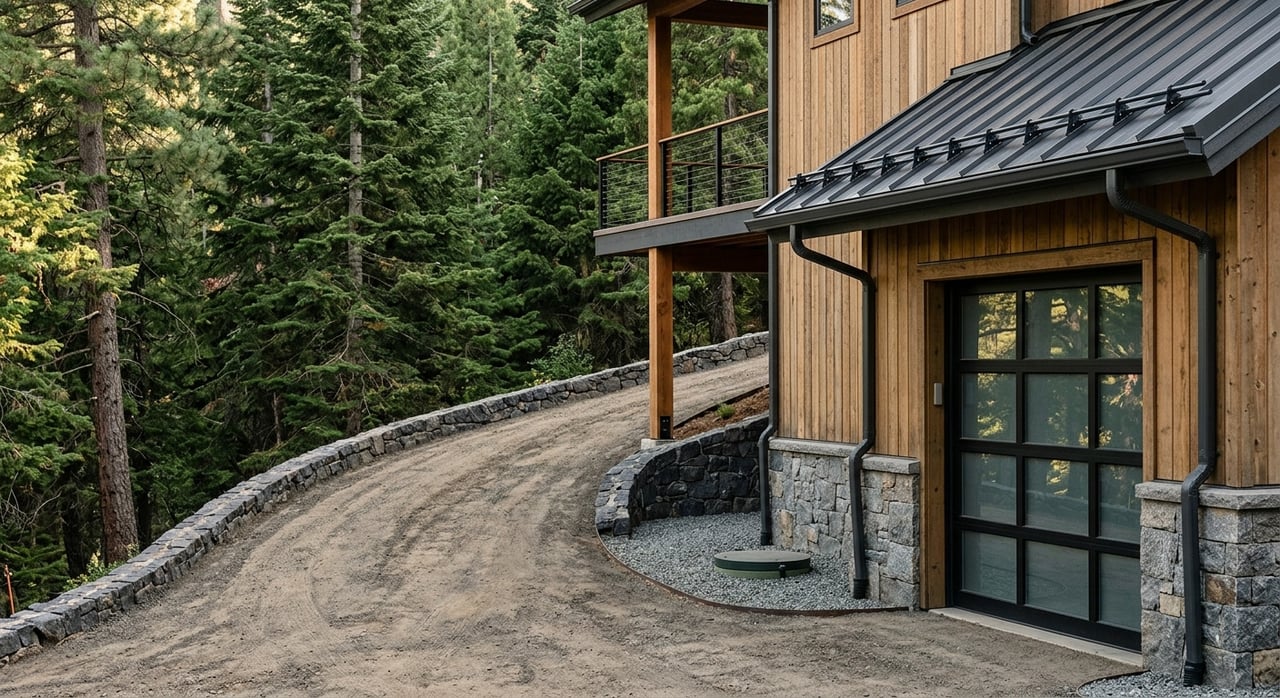
Buying a home in Conifer can feel exciting right up until you realize how different mountain due diligence is from a typical suburban purchase. Here, the big questions often go beyond finishes and floor plans to things like well records, septic permits, road access, snow removal, wildfire mitigation, and insurance. If you want to buy with confidence, a parcel-by-parcel review matters, and this guide will help you focus on the issues that count most in Conifer. Let’s dive in.
Why due diligence matters in Conifer
In Conifer, due diligence is often more about the property’s systems than the cosmetics of the home. Jefferson County guidance points buyers toward verifying private wells, wastewater systems, access permits, snow-plow limits, and defensible space, which makes each property a little different from the next.
That means you should treat every home as its own case study. Two homes in the same area can have very different well limitations, septic histories, road conditions, and wildfire risk factors.
Start with water and septic
Water and wastewater are two of the most important items to verify before you move forward. In many Conifer-area properties, these are private systems, and they require document review, testing, and a clear understanding of how the systems have been maintained.
According to the Colorado Department of Public Health and Environment’s private well guidance, private wells are not regulated under the Safe Drinking Water Act, which means the homeowner is responsible for testing and upkeep. The same guidance notes that a well permit is required for new groundwater wells, but a permit does not guarantee that the well will produce water.
Review the well paperwork
When a home has a private well, you should request the well permit, well driller’s log, pump installer report, and any available water-quality or yield history. These records can help you understand how the well was approved and whether there are permit limits on use.
The state’s mountain groundwater homeowner guide explains that some wells may be limited to indoor use, while others may allow some outdoor use. That distinction matters if you are planning for landscaping, animals, or other water needs.
Confirm septic requirements
Jefferson County’s OWTS Use Permit Program requires a septic inspection and use permit before sale if the system was installed more than five years before the sale date. For permitting, the county also requires raw well-water samples for at least total coliform and nitrate as nitrogen before final approval.
This is one of the most important checkpoints in a Conifer transaction. You will want to know the age of the system, the date of the last pump-out, and whether the tank or drain field has ever been repaired.
Ask these water and septic questions
Before closing, make sure you have clear answers to questions like these:
- When was the septic system last pumped?
- Has the septic tank or drain field ever been repaired or replaced?
- What does the well permit allow?
- Is the well limited to indoor-only use or does it allow some outside use?
- Has the water been tested recently by a state-certified lab?
- Are there any past issues with bacteria or nitrates?
Verify road access and winter use
Mountain access is not something you want to assume. In Conifer, the details of the driveway, road ownership, easements, and winter maintenance can affect daily convenience, emergency access, and long-term costs.
Jefferson County notes on its Outside the Home page that new driveways or modifications accessing a county-maintained road require an access permit. The county also states that access may come from a deeded right-of-way, a recorded ingress-egress easement, or a private road of record, and those accessways must be at least 20 feet wide.
Check driveway compliance
If a driveway or any portion of road on the property is more than 50 feet long, it must meet county roadway design standards. Jefferson County’s roadway standards also require a turnaround for driveways over 150 feet, and the fire protection district must approve the plan.
That makes it smart to review not only the current condition of the driveway, but also whether it appears to align with county and fire-district requirements. Gates and entry structures may need fire-district approval too.
Know who plows the road
Jefferson County’s Snow & Ice Control program covers county-maintained paved and gravel roads, but it does not cover private roads, state highways, or roads not formally accepted by the county. The county also prioritizes certain roads first, so lower-volume residential roads and cul-de-sacs may be plowed later.
If a property is on a private road, ask for any written road maintenance or snow-plowing agreement. That can help you understand who is responsible, how costs are shared, and what winter access may look like after a storm.
Verify easements and boundaries
Jefferson County states on its Right-of-Way Information page that it does not maintain official right-of-way maps. Because of that, a survey, plat review, or title search is often the safer way to confirm where the road, easement, and utility corridors actually sit.
This step can be especially helpful for homes with long driveways, shared access routes, or sloped sites. It is better to confirm access rights before closing than to discover an issue later.
Review wildfire mitigation carefully
Wildfire readiness is part of responsible homeownership in the foothills. In Conifer, due diligence should include looking at the property’s defensible space, vegetation management, and emergency preparedness.
Jefferson County’s wildfire resources advise residents not to assume rescue will be immediate in wildfire-prone areas. The county recommends preparedness, slash removal, and following local hazard-mitigation guidance.
Understand the Home Ignition Zone
The Colorado State Forest Service explains wildfire preparedness through the Home Ignition Zone guide, which focuses on three zones: 0 to 5 feet, 5 to 30 feet, and 30 to 100 feet from the home. The guide also notes that the needed zone may be larger on steep slopes or other challenging terrain.
For a mountain property, that means you should look beyond the house itself. You should also pay attention to nearby trees, overhanging branches, ladder fuels, roof and gutter debris, and accumulated slash.
Ask what mitigation has been done
A seller may have already completed important mitigation work, but you should ask for specifics. Try to learn what has been done in each ignition zone and whether regular upkeep has continued.
Helpful questions include:
- What mitigation has been done in the 0 to 5 foot zone?
- What mitigation has been done in the 5 to 30 foot zone?
- What mitigation has been done in the 30 to 100 foot zone?
- Have gutters and roof areas been cleaned?
- Have slash, ladder fuels, and overhanging branches been addressed?
- What is the evacuation plan if a fire starts nearby?
Check fire restrictions and alerts
Fire restrictions are a normal part of mountain living. The Jefferson County Sheriff fire restrictions page explains that Stage 1 restrictions in unincorporated Jefferson County can prohibit campfires, open burning, fireworks, and other spark-producing activities, and Red Flag Warnings can automatically trigger restrictions.
As part of your due diligence, it is wise to ask whether the household is enrolled in local alert systems and what the current evacuation planning looks like. That information can help you prepare from day one.
Lock down insurance early
Insurance should never be an afterthought when you are buying in Conifer. Since cost and availability can vary by property-specific risk factors, getting quotes early can help you avoid surprises before you waive contingencies.
The Colorado State Forest Service notes on its wildfire mitigation page that insurance cost and availability vary based on the property. That makes mitigation history, access, and site conditions even more important during your review.
If you have trouble obtaining traditional coverage, Colorado’s FAIR Plan information explains the state’s last-resort option for owners who cannot secure standard coverage. The state notes that this coverage is intended for situations where traditional coverage is unavailable, and the plan generally offers more limited and more expensive coverage than a standard homeowners policy.
Search permits before closing
Permit research can reveal details that are not obvious during a showing. It can help you spot additions, grading, driveway work, or accessory structures that may need a closer look.
Jefferson County’s Online Services portal allows you to search past and present permit information and inspection results. The county’s address lookup can also help confirm whether a property is in unincorporated Jefferson County.
This step is especially useful in a mountain market where improvements may have happened over time. A permit search can help you compare the paperwork trail with what is actually on the site.
A smart Conifer due diligence checklist
If you want a simple way to organize your review, focus on these five areas before you remove contingencies:
- Well records and water testing
- Review the well permit, driller’s log, and pump records.
- Confirm recent water testing and ask about any history of bacteria or nitrates.
- Septic inspection and use permit
- Verify whether the OWTS use permit requirement applies.
- Review pump-out, repair, and inspection records.
- Access and winter reliability
- Confirm whether the road is county-maintained or private.
- Review easements, driveway standards, and snow-plowing arrangements.
- Wildfire mitigation
- Review defensible space, vegetation management, and evacuation readiness.
- Ask what mitigation work has already been completed.
- Insurance and permits
- Get insurance quotes early.
- Search permit history and inspection results before closing.
Work with a local guide
Conifer home buying rewards careful, local knowledge. The safest approach is to treat each property as a unique systems check, not just a standard home inspection.
If you are thinking about buying in the foothills, Mary Rosinski can help you ask sharper questions, spot mountain-property issues earlier, and move forward with more confidence. Start Your Mountain Move.
FAQs
What due diligence matters most when buying a home in Conifer?
- The biggest items are usually the well, septic system, road access, winter maintenance, wildfire mitigation, insurance availability, and permit history.
What should buyers verify about a private well in Conifer?
- You should review the well permit, driller’s log, pump installer report, recent water-quality testing, and any records showing the well’s allowed uses or past yield history.
What septic rules apply to a Conifer home purchase?
- In Jefferson County, a septic inspection and use permit are generally required before sale when the system was installed more than five years before the sale date.
What road access questions should buyers ask for a Conifer property?
- Ask whether the road is county-maintained or private, whether there is a written maintenance or plowing agreement, and whether access easements and driveway approvals are documented.
What wildfire due diligence should buyers do for a Conifer home?
- Buyers should review defensible space around the home, ask what mitigation has been completed in the Home Ignition Zone, and learn the property’s evacuation and alert-system setup.
Why should buyers get insurance quotes early for a Conifer home?
- Insurance cost and availability can vary by property-specific risk factors, so getting quotes early helps you understand coverage options before removing contingencies.