If you love the idea of waking up to pine trees, mountain light, and a little more breathing room, Evergreen can feel like the dream. But owning a mountain home here also means managing snow, access, water, and wastewater systems in a way many city or suburban buyers have never had to think about. The good news is that once you know the daily realities, you can buy with confidence and enjoy the lifestyle for what it is. Let’s dive in.
Mountain living starts with snow
In Evergreen, snow is not just a seasonal backdrop. It is part of how you plan your driveway, maintain your home, and move through daily life. NOAA data for the Evergreen station shows average annual snowfall of 80.8 inches from 1991 to 2020, with the biggest snowfall months typically being March and April.
That matters because winter ownership here is less about reacting to one big storm and more about having a routine. You may be thinking about snow removal, roof conditions, drainage, icy walkways, and how quickly your property becomes usable again after a storm. In mountain areas, those tasks are part of normal homeownership.
Road access affects your routine
One of the first questions to ask about any Evergreen property is simple: who maintains the road? Jefferson County Road & Bridge handles snow and ice control on county-maintained roads in unincorporated areas, but private roads are not included in county plowing.
That distinction can shape your day-to-day experience more than buyers expect. A beautiful home at the end of a long private drive may also require a private plowing plan, extra time for winter access, and a clearer understanding of who is responsible after each storm. Before you fall in love with a setting, make sure you understand how you will actually get in and out all winter.
Driveways matter more than you think
A mountain driveway is not just a feature on a listing sheet. Its length, slope, surface, and sun exposure can all affect how manageable a property feels in winter. Even two homes at similar price points can offer very different ownership experiences based on driveway design alone.
If a driveway is long, steep, shaded, or privately maintained, you will want to think beyond looks. You may need more frequent snow removal, better traction planning, and a realistic sense of how the property functions during storms and freeze-thaw cycles. This is one of the most important practical filters for buyers in Evergreen.
Roof snow load is part of ownership
At roughly 7,000 feet, roof performance is not a minor detail. Jefferson County's snow-load chart lists a ground snow load of 54 pounds per square foot and a roof snow load of 38 pounds per square foot at about that elevation.
You do not need to be an engineer to understand the takeaway. In Evergreen, roof maintenance, ice management, and drainage planning are part of long-term ownership. Buyers should pay attention to roof condition, snow-shedding patterns, gutters and drainage paths, and whether the home appears designed for sustained winter weather rather than occasional snow events.
Your vehicle becomes part of the housing decision
In the foothills, your home choice and your vehicle choice are connected. Colorado can activate traction and chain laws on state highways when weather conditions require it, and the current passenger-vehicle traction law has specific equipment standards.
CDOT says compliant passenger vehicles need either AWD or 4WD with winter, all-weather, or mud-and-snow tires with at least 3/16-inch tread depth, or chains or an approved alternative traction device. It also makes clear that AWD and 4WD do not improve stopping the way good tires do. In other words, winter access is about preparation, not just drivetrain badges.
Winter driving takes planning
For many buyers, this is one of the biggest lifestyle shifts. Even if a home is reachable by a standard sedan much of the year, winter may require better tires, traction devices in the vehicle, and a more realistic plan for commute routes you actually use.
This is especially important if your route includes state highways or a private road to the home itself. A mountain address can change your budget, your packing list, and your comfort level behind the wheel. It is smart to think through that before you buy, not after your first heavy snow.
Many homes rely on private wells
Water service in Evergreen is not always as simple as turning on a tap and assuming everything is handled by a public utility. Some foothills properties rely on private wells, and in Colorado, private well water quality is a homeowner responsibility.
The Colorado Department of Public Health and Environment states that private wells are not regulated under the Safe Drinking Water Act. The Colorado Division of Water Resources issues well permits. For buyers, that means you should think in terms of documentation, testing history, and ongoing verification.
Well records matter
Jefferson County Public Health says typical well-water tests should include bacteria, nitrate, and fluoride. The county also notes that nitrate can come from septic systems, horse enclosures, and fertilizer use, and it flags naturally occurring radiation, including uranium and radium, as a local groundwater concern.
In practical terms, you should ask for the well permit, pump history, water-quality records, and any treatment equipment service records. You should also ask whether the property is subject to any special testing or setback requirements tied to onsite wastewater permitting. With mountain homes, paper trails matter.
Septic systems need routine care
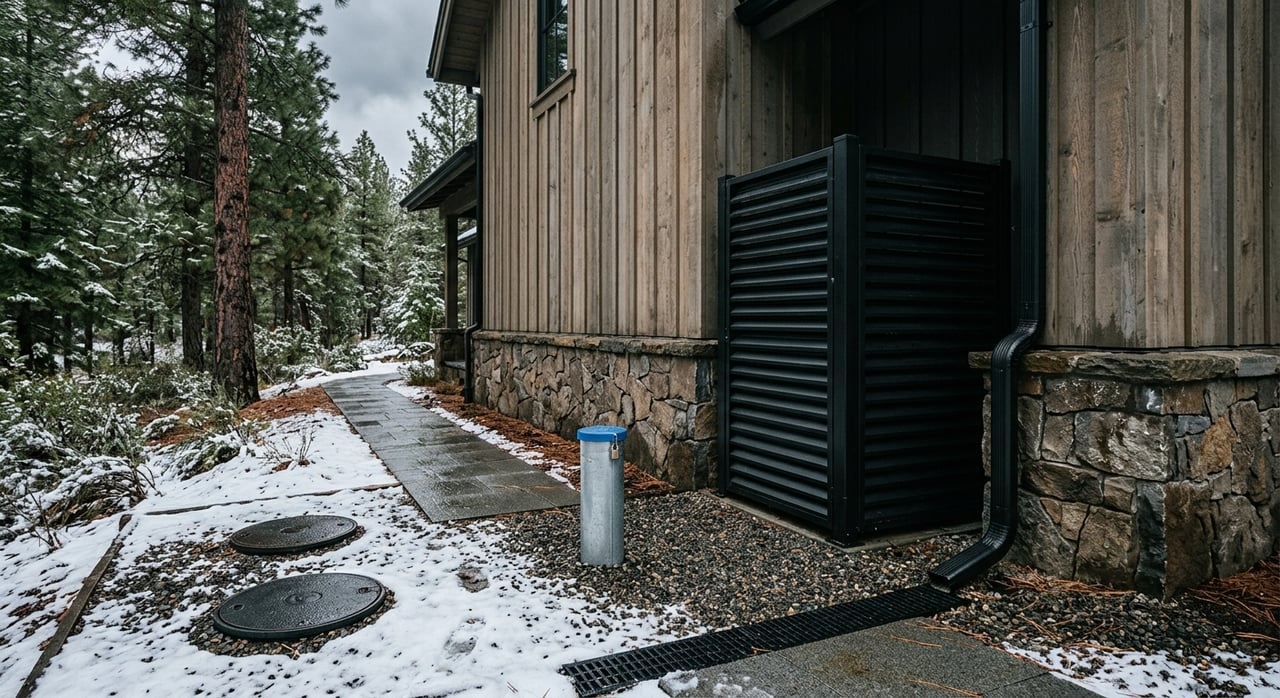
Many Evergreen-area homes also rely on onsite wastewater treatment systems. In Jefferson County, a typical system includes a septic tank and absorption bed, and regular care is part of responsible ownership.
The county advises homeowners not to drive or park on the absorption bed and not to flush or drain grease, wipes, paints, solvents, or other non-household waste into the system. It also recommends avoiding sudden overloads by spreading out water use. These systems work well when they are used and maintained properly, but they are not set-it-and-forget-it infrastructure.
Advanced systems require more oversight
Some homes use higher-level treatment systems instead of a more standard septic setup. Jefferson County says these systems typically require an operating permit, a service-provider relationship with at least a one-year contract, and service intervals that are typically every six months.
The county also notes that certain components, such as blowers, should be kept free of snow and ice. For a buyer, that means an advanced system may require more active oversight and recurring service coordination. It is not necessarily a problem, but it is a commitment you should understand clearly before closing.
The best buyers ask practical questions
Evergreen tends to reward buyers who stay grounded in the basics. The homes can be beautiful, but the smartest decisions usually come from practical questions asked early.
Here are some of the most useful ones:
- Is the road county-maintained or private?
- If it is private, what is the winter-access plan?
- How steep or shaded is the driveway?
- What tire setup or traction devices will fit your real commute?
- Is the home on a private well, a septic system, or a higher-level treatment system?
- Are permits, service records, and testing records current?
- Does the home appear prepared for long-duration winter conditions, including roof snow load and drainage?
Those questions can help you sort out whether a property fits your lifestyle, not just your wish list.
Mountain ownership is a lifestyle match
Owning a mountain home in Evergreen can be deeply rewarding. You get the setting, the atmosphere, and the sense of place that draws so many people to the foothills in the first place. But the tradeoff is that your home often asks more of you.
Snow management, winter driving, private water systems, and wastewater maintenance are not warning signs. They are simply part of the ownership model in many mountain properties. When you understand that upfront, you can choose a home that feels inspiring and manageable.
Buy with clear eyes
The right Evergreen home is not just the one with the best views or the prettiest great room. It is the one that fits how you want to live day to day, in every season. That means looking closely at access, systems, maintenance demands, and your comfort with mountain routines.
That kind of clarity is where local guidance makes a real difference. If you want help sorting through the practical side of foothills living and finding a property that truly fits, Mary Rosinski can help you make your move with confidence.
FAQs
What is daily winter life like for Evergreen mountain homeowners?
- Daily winter life in Evergreen often includes routine snow removal, driveway management, roof and drainage awareness, and planning around changing road conditions rather than treating snow as an occasional event.
Are private roads in Evergreen plowed by Jefferson County?
- No. Jefferson County does not plow private roads, so if a home is on a private road or drive, you will need to understand the property's private winter-access plan.
What vehicles work best for owning a home in Evergreen?
- A vehicle that meets Colorado winter traction requirements and has appropriate tires or traction devices is often the most practical choice, especially if you regularly drive state highways or steep foothills roads.
Do Evergreen homes commonly have private wells?
- Some foothills properties do rely on private wells, and when they do, the homeowner is responsible for understanding well permits, water-quality records, and any treatment equipment history.
What should buyers know about septic systems in Evergreen?
- Buyers should confirm whether the home has a standard septic system or a higher-level treatment system, and they should review permits, maintenance records, and any required service arrangements before closing.
How can you tell if an Evergreen mountain home is a good fit?
- A good fit usually comes down to practical alignment: road maintenance, driveway conditions, winter driving needs, well and septic responsibilities, and whether you are comfortable with the year-round upkeep that mountain living requires.