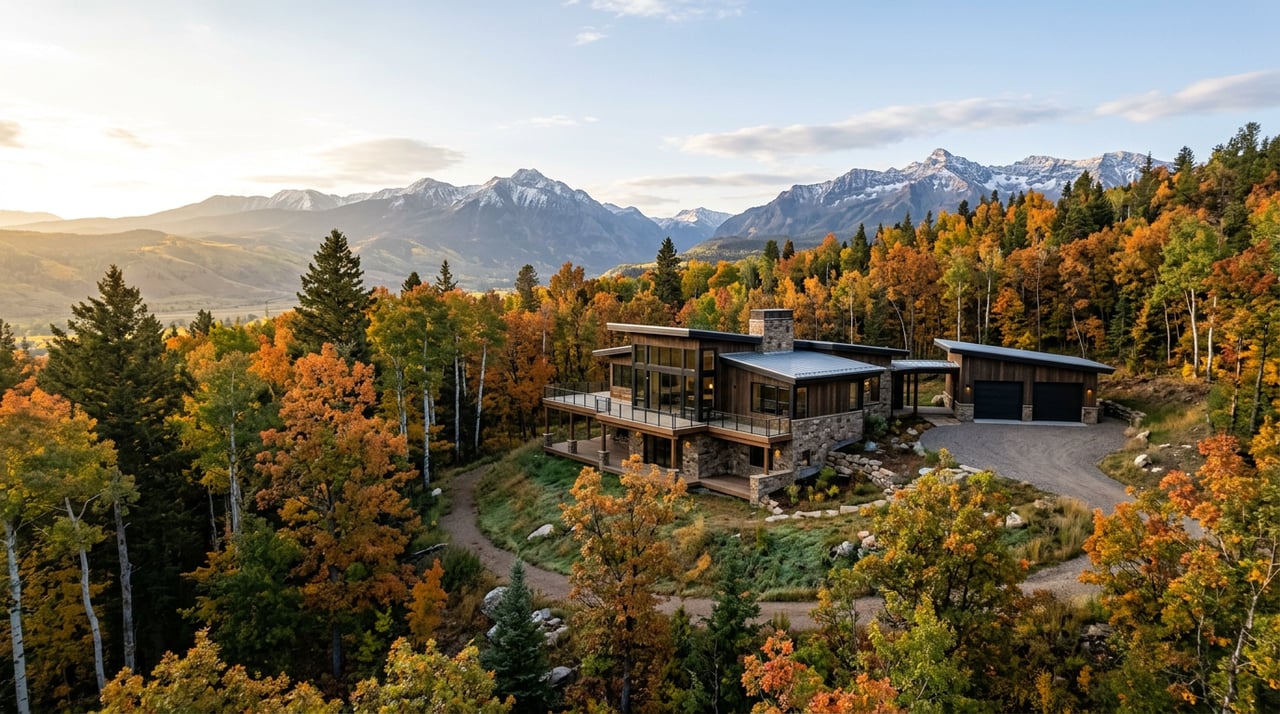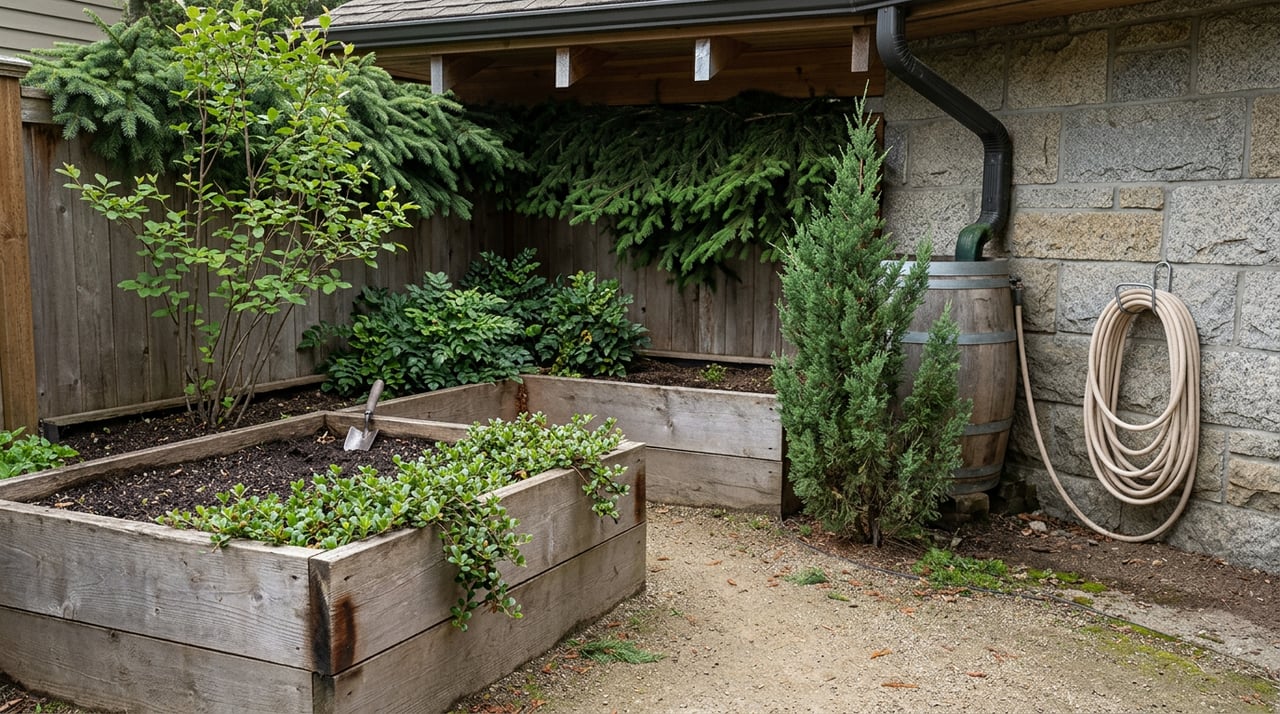
A buyer walks a 4.8-acre parcel off Brook Forest Road in July. The listing photos show a wellhouse tucked behind the garage, the seller mentions the well "runs great," and the buyer starts picturing raised beds along the south fence and maybe a couple of goats for the kids. Two weeks later, during the inspection objection period, the well file comes back from the title company. The permit reads household use only. Indoors, the water is fine. Outdoors, legally, none of it can touch soil, an animal, or a hose bib feeding a garden. The well itself never changed. The buyer's plans did.
This is the detail that gets skipped in most Evergreen buying conversations, and it matters more than the well's actual output, more than the home's finish level, and in a lot of cases more than the acreage number printed on the listing.
The Well on the Listing Isn't the Same as the Right to Use It
In Colorado, groundwater is managed separately from the land sitting on top of it. Owning the dirt does not automatically grant you the water beneath it. The Colorado Division of Water Resources, part of the State Engineer's Office, issues a permit for each well that spells out exactly what the water inside it is legally allowed to do, and that permit is the document that governs the property, not the flow rate a seller quotes verbally or the clarity of the water in a glass.
Most wells drilled on parcels under 35 acres since May 8, 1972 fall into the household use only category. Colorado State University's Extension program explains the reasoning: household use is estimated to consume roughly 10 percent of the water pulled from the ground, with the rest returning to the water cycle, which is why the state allows it without demanding the well owner prove no injury to older, senior water rights nearby. The tradeoff is that the permit strictly limits use to inside the home. No garden hose. No stock tank. No filling a small pond. A well can test at a strong 8 or 10 gallons per minute and still be barred from watering a single tomato plant if that is what the permit says.
Parcels of 35 acres or more sit in a different category. A domestic and livestock permit on that size of land typically allows indoor use, watering of domestic animals, and irrigation of up to one acre of lawn or garden, all without needing the buyer to prove anything to the state beyond the acreage itself. That single number, 35 acres, is doing more work in an Evergreen purchase contract than almost any other line in the file.
| Permit type | Typical acreage | What it legally allows | Common cap |
|---|---|---|---|
| Household use only | Under 35 acres, drilled on or after May 8, 1972 | Indoor use in one home | 15 gallons per minute |
| Domestic and livestock | 35 acres or more | Indoor use, domestic animals, up to 1 acre of lawn or garden irrigation | 15 gallons per minute (post-1971 wells) |
| Exempt commercial | Under 35 acres, parcel predates June 1, 1972 subdivision rules | Limited business use, 0.3 acre-feet per year | Set case by case |
Why the 35-Acre Line Bites Harder in Evergreen Than It Sounds
A lot of Evergreen's most photographed listings sit well under that 35-acre threshold. Subdivided lots in Bergen Park, Hiwan, and the Ridge are exactly the kind of parcel size where a household use only well is standard, not an exception, and current guidance for small-acreage buyers across Colorado notes that many modern subdivisions carry plat notes locking every well on the plat to indoor use regardless of how the individual well performs. Meanwhile, the larger legacy holdings out toward Upper Bear Creek carry a different profile, the kind of acreage where multi-million-dollar estate listings sit on 28 or more acres, comfortably clearing the 35-acre line or close enough to it that the domestic and livestock classification is worth confirming rather than assuming. The acreage number on a listing sheet is really a proxy for a legal water classification, and that classification is worth more to a buyer who wants a working garden or a couple of horses than an extra bedroom.
Not every Evergreen property depends on a well in the first place. The Evergreen Metropolitan District operates one water treatment plant, eight water pump stations, and ten water reservoirs, describing its service territory as running from Kittredge to El Rancho. A property inside that territory draws treated municipal water and is not subject to any of this. A property outside it, even one just a half mile away on the next ridge, may be entirely dependent on the well classification described above. Confirming which side of that line a specific address falls on is worth a call to the district before writing an offer, because it changes the entire conversation about what the property can support.
The Second System Nobody Photographs
Well permits govern water coming in. Septic, formally an on-site wastewater treatment system or OWTS, governs where it goes after. Jefferson County requires that before a property with an OWTS is sold, the system be inspected and the owner obtain a use permit if the system was installed more than five years before the closing date. That paperwork rarely makes it into a listing photo set, but it is just as binding as the well permit and worth requesting in the same email.
Why This Year's Market Actually Gives Buyers Room to Ask
Depending on which platform a buyer checks this week, Evergreen's median sits almost anywhere. Zillow's most recent update put the typical home value at $872,846, down 4.7 percent from a year earlier. Redfin's three-month window ending June 2026 showed a median sale price of $888,000, up 1.0 percent over the same period the year before. Movoto logged a $1,040,000 median sale price for July 2026 alone. Altos' snapshot from August 11, 2026 put the current median list price at $1.1 million with 215 active listings. Four sources, the same town, the same summer, and a spread of more than $200,000 between them. That spread is the real lesson before it is anything else: a headline median in Evergreen tells a buyer almost nothing about what a specific parcel can legally support, which is exactly why the permit classification matters more than the price bracket a home happens to sit in.
The pace of the market has shifted too, and it works in a buyer's favor here. Redfin's data for the three months ending June 2026 shows homes taking a median of 20 days to go under contract, up from 8 days over the same window a year earlier. The Colorado Association of REALTORS' regional report from June 2026 described Evergreen and Conifer inventory rebuilding to the deepest buyer selection in more than a decade, with year-to-date sales still up over 10 percent but sellers now competing harder on pricing, condition, and presentation.
None of that is a coincidence for the well permit question. When homes sold in eight days, buyers waived contingencies to compete and permit verification got skipped under pressure. In a market where sellers are sitting longer and buyers have more room to negotiate, there is no good reason to close without the well permit number in hand, checked against the state's own well permit search tool, and matched to what you actually intend to do with the land.
Before You Waive Anything, Ask For
- The well permit number, searched directly through the Colorado Division of Water Resources permit search tool rather than taken on the seller's word
- The original permit application and any well construction or pump installation records on file with the state
- A flow rate test in addition to a standard water quality test, since a permit's legal allowance means nothing if the well cannot physically deliver it
- Confirmation of whether the property sits inside the Evergreen Metropolitan District service boundary or depends entirely on a private well
- If the home has a septic system, the most recent Jefferson County use permit and inspection date, especially if the system is more than five years old
A Few Questions That Come Up Once Buyers Understand This
Can a household use only well be upgraded to allow outdoor watering? Sometimes, through a court-approved augmentation plan that replaces the water used, but that process involves engineering and legal costs that should be priced into an offer, not discovered after closing.
Does the well classification show up anywhere in the MLS listing itself? Rarely. It lives in the permit file at the state, not in the marketing description, which is exactly why it needs to be pulled separately rather than assumed from the listing photos or the seller's description.
Does a household use only restriction affect what the home is worth? It affects what the land can do, which is a different question from square footage or finish quality, and it is worth factoring into any offer on acreage where outdoor use was part of the appeal.
Evergreen rewards buyers who ask about the water before they ask about the kitchen. If you are comparing properties and want someone who checks the permit file before you fall for the view, Closing Colorado can walk the parcel-level details with you before you write an offer. Start Your Mountain Move.